
The Evolution of Learning: Why Education Demands a Human, Education Develop Your Mind
Education Develops Your Mind & Enhances Academic Performance For centuries, formal education operated on a fairly simple, mechanical promise:
you show up, you sit in rows, you absorb a standardized curriculum, and you graduate with a degree that acts as a golden ticket to a predictable career. It was an industrial model designed for an industrial economy.
Education improves your mind
Today, that model hasn’t just fractured—it has completely dissolved.
Education Develop Your Mind, just beacause We are living in an era where information is entirely democratized, artificial intelligence can instantly synthesize complex data, How Education Develops Your Mind & Enhances Academic Performance and the half-life of professional skills is shrinking by the minute. learning improve critical thinking The question is no longer “What do you know?” but rather “How quickly can you learn, unlearn, and adapt?”
To understand where education is heading, we have to look closely at the shift from rigid, institutional learning to fluid, lifelong ecosystem building. This isn’t just about putting tablets in classrooms; it’s a fundamental rewrite of the human learning experience.
1. The Death of the “Just-in-Case” Learning Model
For generations, education was built on a “Just-in-Case” framework. Education Develop Your Mind You went to school to accumulate a massive warehouse of knowledge just in case you needed it twenty years later in a specific corporate role. You memorized historical dates, algebraic formulas, and syntax rules.
How education develops your mind
In a hyper-connected world, this approach is fundamentally obsolete. We have transitioned permanently into an era of “Just-in-Time” learning.
[Traditional Model] —> Just-in-Case —> Memorize everything early on.
[Modern Ecosystem] —> Just-in-Time —> Access specific skills as needed.
When specific, highly technical skills can Education Develop Your Mind become obsolete within a few years, the ability to rapidly acquire a micro-skill exactly when a project demands it is far more valuable than a static degree earned a decade ago. How education develops your mind ,Education is shifting its focus away from raw content storage toward building high-level cognitive infrastructure:
- Critical Evaluation: Sorting through massive oceans of data to find what is credible, accurate, and relevant.
- Problem Framing: Learning how to ask the right questions, which is now infinitely more important than simply memorizing answers.
- Systems Thinking: Understanding how different fields, industries, and technologies intersect and impact one another.
2. The Education Develop Your Mind Rise of the Hyper-Personalized Cognitive Partner
The traditional classroom has a major structural flaw: it forces a room of thirty unique minds to move at the exact same pace. If a student falls slightly behind on a foundational concept in mathematics, the class moves on anyway, leaving them with a permanent gap in their understanding. How education develops your mind ,If a student is highly advanced, they are forced to wait, burning through their natural curiosity out of pure boredom.
We are finally seeing the end of the “one-size-fits-all” paradigm through AI-driven cognitive partners.
Imagine an Education Develop Your Mind ecosystem that adapts to the user in real time. It doesn’t just grade a paper as an $A$ or a $C$; it analyzes a student’s cognitive friction points. It notices that a student understands the conceptual framework of physics but struggles specifically when those concepts require fractional division.
Furthermore, personalization is extending into multimodal adaptation. How education develops your mind ,If a student learns a concept best through visual spatial relationships, their platform can instantly generate interactive diagrams. If they learn best through narrative storytelling, the system rewires the entire lesson into a historical case study. Education is transforming from a rigid monologue delivered by an institution into a dynamic, ongoing dialogue between the learner and their tools.
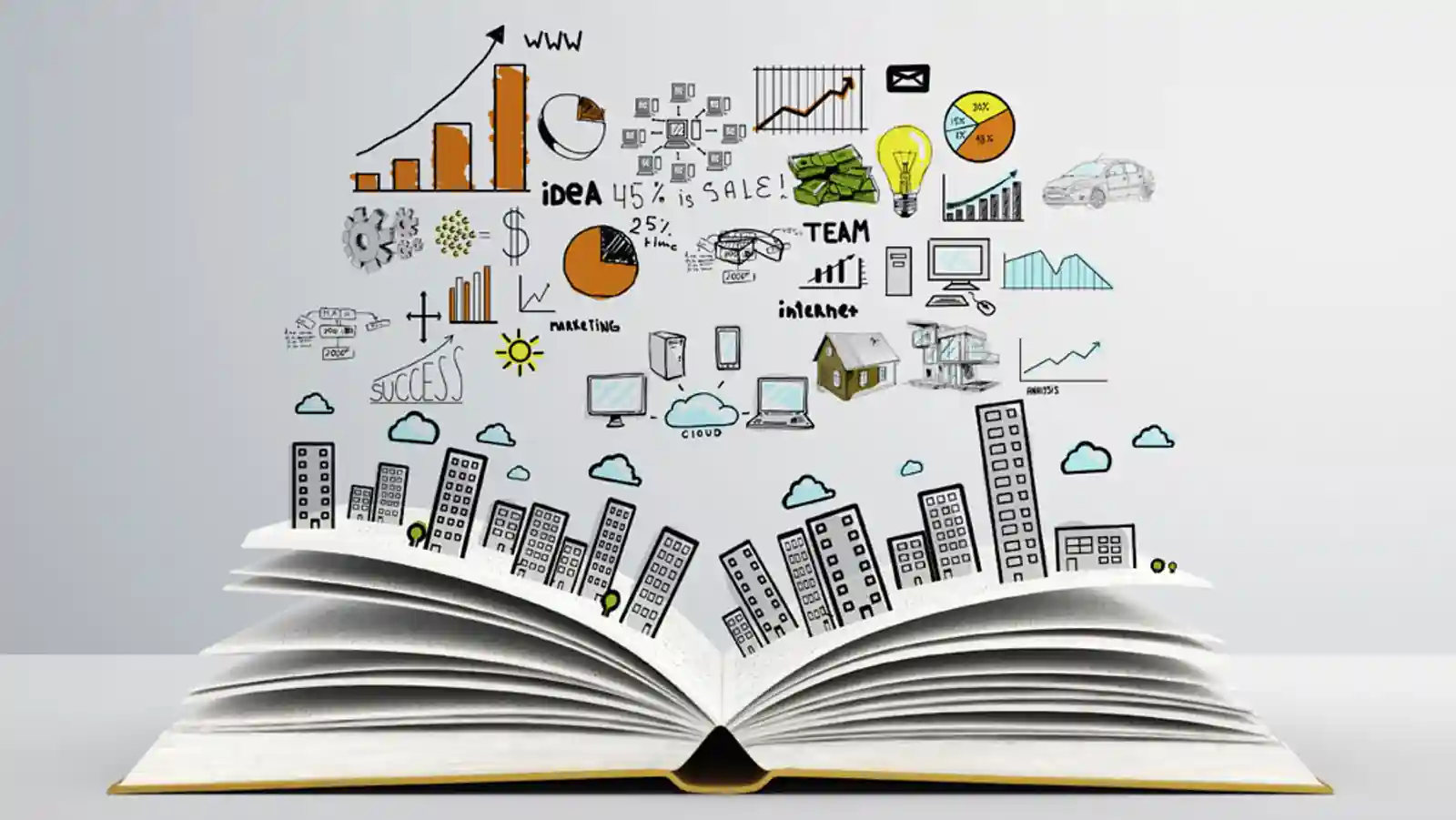
3. The New Classroom Economy: Facilitators Over Lecturers about Education Develop Your Mind
How education develops your mind, If a student can access a world-class, crystal-clear video lecture on quantum mechanics or macroeconomics from a top global expert at any time, what happens to the role of the local educator?
The role doesn’t disappear—it actually becomes far more human, meaningful, and impactful. The educator is transitioning from the “sage on the stage” to the “guide on the side.”
| The Old Instructional Role | The Modern Learning Facilitator |
| Broadcast: Delivering static, repetitive lectures to passive rooms. | Design: Creating immersive, active environments for deep collaboration. |
| Evaluation: Grading performance based on rote memorization testing. | Mentorship: Coaching students through intellectual roadblocks and emotional friction. |
| Silos: Teaching subjects in strict isolation from one another. | Integration: Helping students connect ethics, technology, and real-world application. |
When human teachers are freed from the mechanical burden of grading identical worksheets and repeating the exact same lectures year after year, they can focus entirely on what humans do best: empathy, emotional intelligence, mentorship, and inspiring genuine curiosity.
4. The Micro-Credentialing Revolution and the Unbundling of the University
The traditional four-year higher education degree is facing a massive existential crisis. With tuition costs skyrocketing and corporate environments prioritizing demonstrated capability over institutional pedigree, the university system is rapidly unbundling.
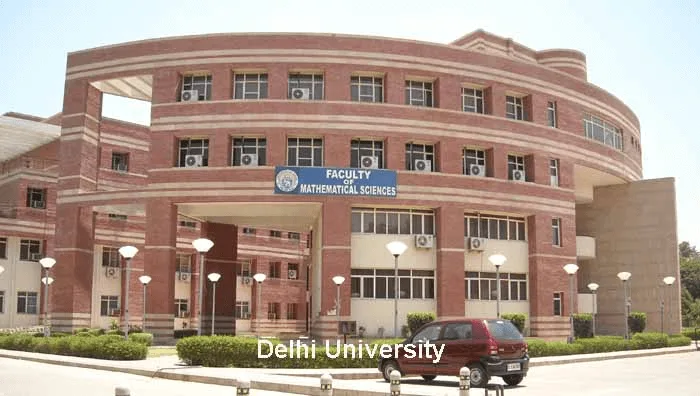
We are seeing a massive shift toward micro-credentials, nanodegrees, and skills-based portfolios. Companies are looking less at the name stamped at the top of a piece of parchment and more at verified evidence of what a candidate can actually build, write, or solve.
The New Currency of Hiring: “Show me your portfolio, show me your open-source contributions, show me the live projects you’ve managed—don’t just show me your major.”
This shift democratizes economic mobility. A dedicated learner can stack targeted, highly specialized credentials from diverse global institutions at a fraction of the cost of a traditional degree. It allows individuals to dynamically pivot their careers without needing to step out of the workforce for years at a time to re-tool.
5. Lifelong Learning is No Longer a Cliché—It’s a Survival Strategy
We used to view life as a neat, linear progression divided into distinct chapters:
[Phase 1: Play] —> [Phase 2: Learn (School)] —> [Phase 3: Work (Career)] —> [Phase 4: Retire]
That linear timeline is entirely dead. Today, the loop between learning and working must happen concurrently every single week. Continuous learning has evolved from a noble personal development goal into an absolute economic necessity.
Because automation and cognitive tools are taking over routine, repetitive cognitive tasks, the human workforce is consistently pushed upstream toward higher-order creative problem solving and strategic management. This requires a mindset of constant intellectual renewal. The most successful professionals of the future won’t be those who finished their education at age 22, but those who maintain a state of permanent curiosity, viewing themselves as perpetual white belts who are always ready to learn a new discipline from scratch.
6. Cultivating the Uniquely Human Skill Set
As technology becomes increasingly capable of handling data processing, mathematical calculation, and basic content generation, the ultimate goal of education must pivot. We must stop training our children to act like bad computers, and start training them to excel at being remarkably distinct humans.
The core curriculum of the future must place massive emphasis on the things that cannot be easily replicated by software:
- Metacognition: Understanding how your own mind processes information, handles bias, and manages focus in a world designed to distract you.
- Collaborative Intelligence: Navigating complex human group dynamics, cross-cultural nuances, and deep empathy.
- Resilience and Adaptability: Developing the psychological stability to handle constant economic and technological disruption without losing your footing.
- Ethical Frameworks: Evaluating the moral implications of our rapidly advancing technological tools.
Moving Forward: The Horizon of Learning
The future of education is incredibly bright, provided we have the courage to break down the industrial structures that hold it back. We are moving toward a decentralized, deeply personalized, human-centric ecosystem where learning is integrated seamlessly into our daily lives.
By shifting our focus from passive absorption to active creation, from standardized testing to personalized growth, and from institutional gatekeeping to democratic access, we can unlock an absolute renaissance of human potential. The tools are ready. The network is built. Now, it’s simply a matter of stepping into the classroom of the future with an open, curious mind.