
Beyond the Hype: How “Agentic AI” and Human Collaboration are Redefining the Future of Work
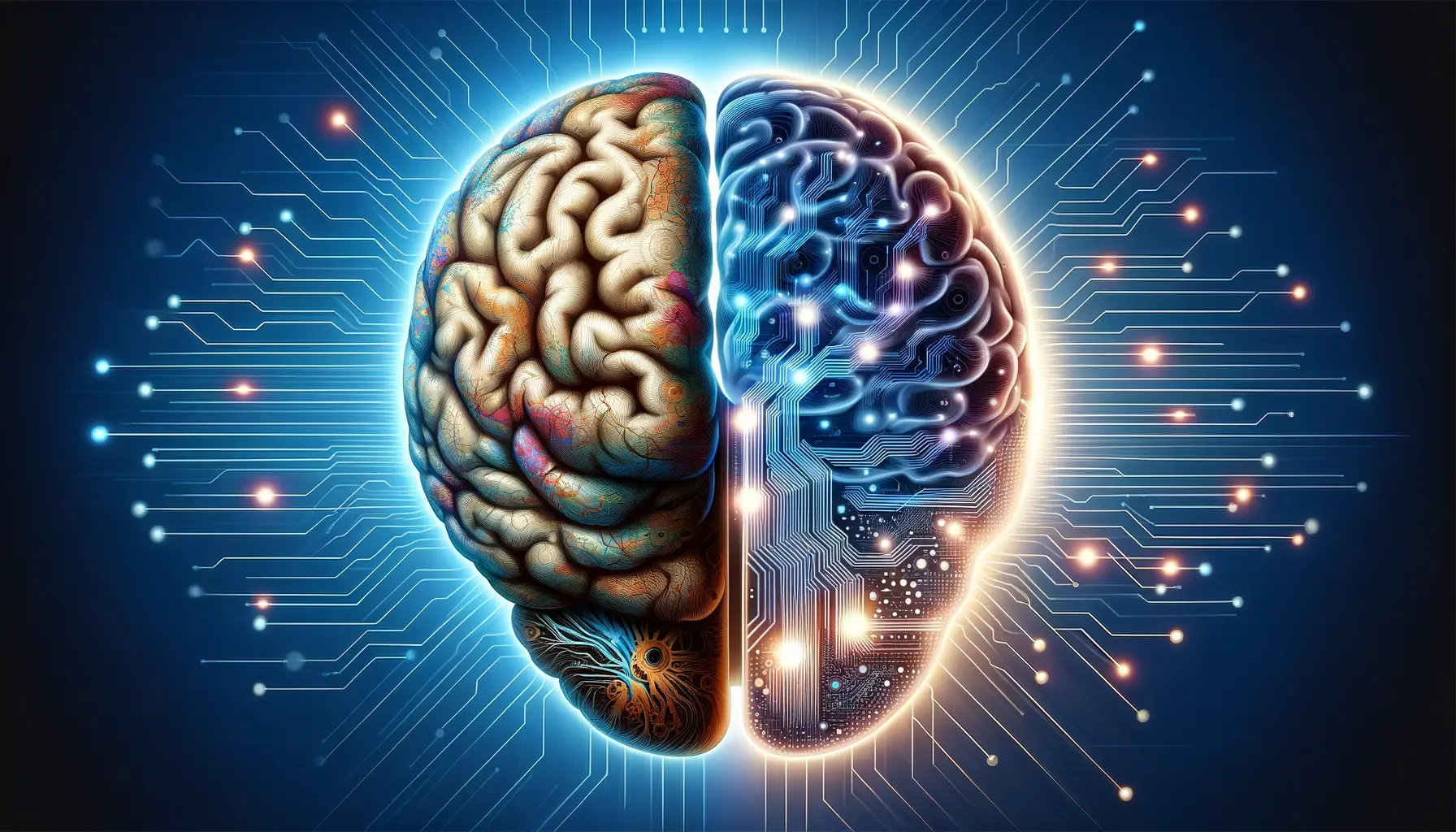
The conversation around Artificial Intelligence has officially broken out of its sandbox.
For the past few years, our collective experience with AI felt a bit like a magic trick. We typed a prompt into a text box, watched a chatbot generate an essay, a piece of code, or a surreal image in seconds, and gasped at the novelty. It was impressive, but it was fundamentally reactive. The AI sat quietly, waiting for human commands, acting as a highly advanced digital filing cabinet or an eager copywriter.
We have moved past the era of simple experimentation. The honeymoon phase of generative Artificial Intelligence is over, and we are entering what tech analysts call the “Year of Truth” for automation.
AI is no longer just an instrument waiting for your instructions; it is evolving into an active partner. The biggest shift reshaping our offices, creative studios, and laboratories isn’t just better text generation—it’s the rise of Agentic Artificial Intelligence and Multimodal systems.
If you are wondering how this shifts the landscape for your career, your business, or your daily routine, you are not alone.
Let’s pull back the curtain on how human-AI collaboration is actually unfolding, the real impact on the workforce, and how you can position yourself to thrive alongside your new digital coworkers.
1. The Autonomous Shift: From Tools to “Agents of Artificial Intelligence”
To understand where the technology is going, we have to look at the architectural shift happening under the hood of modern software. Traditional generative AI requires a human to guide it step-by-step: “Write an email. Now summarize this spreadsheet. Now draft a reply based on that summary.”
Agentic AI flips this script. Instead of executing isolated tasks, an AI “agent” is given a high-level objective and left to figure out the steps autonomously.
How it works in practice: Instead of asking an AI to draft a single customer response, an enterprise assigns an Artificial Intelligence agent to “optimize the logistics pipeline for delayed shipments.”
The agent autonomously looks up data in the ERP (Enterprise Resource Planning) system, cross-references it with customer histories in the CRM, predicts potential delays based on weather data, drafts personalized updates to affected clients, and alerts the warehouse team—all without needing a human to click “next” at every stage.
According to data from Microsoft’s Work Trend Index, nearly half of all advanced AI. conversations are now used to support heavy cognitive work: deep analysis, strategic forecasting, and complex problem-solving. Artificial Intelligence is transitioning into a digital team member that can execute multi-step workflows across completely different software platforms.
2. Multimodal Artificial Intelligence: Giving Machines Eyes and Ears
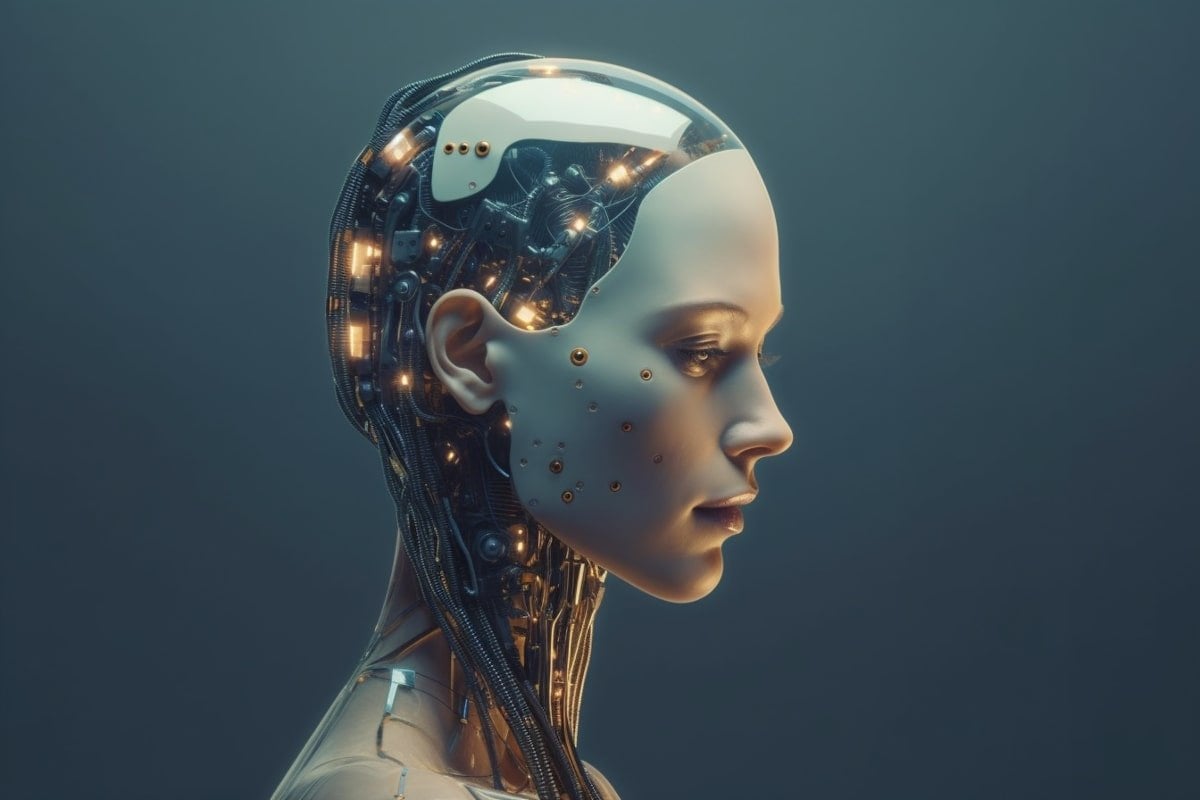
At the same time software is becoming more autonomous, it is also breaking out of text-only boundaries. Early AI models could only understand strings of words. Today, Multimodal AI allows systems to seamlessly interpret text, audio, live video, blueprints, and complex spatial relationships simultaneously.
This has dramatically expanded the types of jobs touched by automation. Previously, fields like quality control, architectural design review, and physical product testing were considered “safe” from automation because they required human eyes.
[Traditional AI] ——> Limited to processing text and structured data tables.
VS.
[Multimodal AI] ——> Parses images, video, schematics, and live audio in real-time.
With multimodal models, an AI can look at a photograph of a commercial construction site, compare it directly to the architectural blueprints, and immediately identify that a support beam is misaligned by three inches. In manufacturing, computer vision systems scan production lines at lightning speed, catching microscopic defects that a tired human supervisor might miss after an eight-hour shift.
Rather than replacing the expert, the technology acts as an always-on assistant, filtering out the noise so human specialists can focus their attention exactly where a problem requires human ingenuity.
3. The Reality of the Artificial Intelligence Job Market
We cannot talk about AI without addressing the elephant in the room: job security.
The headlines can feel incredibly alarming. Major technology and financial firms have rolled out structural layoffs, frequently citing investments in automation and AI infrastructure as a driving factor. Mid-level management structures are flattening, and administrative data-entry roles are shrinking rapidly.
However, looking at raw layoff numbers doesn’t tell the whole story. While traditional roles are being heavily disrupted, the demand for tech-fluent talent is exploding.
- The Growth Disparity: According to data from the Bipartisan Policy Center and Lightcast, job postings explicitly requiring AI skills have surged by over 140% year-over-year, even while general job postings have plateaued.
- The Skill Premium: Employers are no longer looking for people who just know how to use a basic search engine; they are actively hunting for professionals who understand. how to orchestrate AI workflows within fields like healthcare, finance, and legal services.
The World Economic Forum highlights that the modern workforce isn’t experiencing a simple “human replacement” wave, but rather an aggressive role transformation. The jobs aren’t necessarily disappearing entirely; instead, the core skills required to do them are shifting beneath our feet.
4. The Human Advantage: What Machines Can’t Copy
As AI handles more of the analytical, repetitive, and administrative heavy lifting, a fascinating paradox is emerging: human-centric skills are becoming more valuable than ever.
When software can assemble its own code based on plain-English instructions, the competitive edge shifts away from manual coding syntax and moves toward structural orchestration, systemic thinking, and intent. When an AI can instantly generate a 50-page financial compliance report, the value is no longer in writing the report—it’s in the critical thinking required to audit the AI’s conclusions and apply contextual human judgment.
If you want to future-proof your career, double down on these core human capabilities:
Contextual and Ethical Judgment
AI operates on patterns found in historical data. It does not understand nuance, cultural sensitivities, or the ethical gray areas of a high-stakes business negotiation. Humans provide the moral compass and the situational awareness that algorithms completely lack.
High-Level Creative Strategy
An AI can generate ten variations of a marketing slogan in three seconds, but it doesn’t know why a particular emotional hook will resonate with a community experiencing a local crisis. True creative vision—connecting disparate ideas to tell a deeply human story—remains an entirely human domain.
Emotional Intelligence & Leadership
People want to be led, mentored, and supported by other people. In client-facing industries, healthcare, and team management, empathy is not a “soft skill”—it is a critical economic asset. The ability to build trust, navigate office politics, and motivate a team is something no line of code can replicate.
5. Overcoming the Pitfalls: “Workslop” and the Trust Gap
The road to an AI-integrated workplace isn’t without speed bumps. As organizations rush to deploy these systems, a new corporate headache has emerged, colloquially known as “workslop.”
Workslop occurs when employees passively rely on generative AI tools to churn out generic, unverified text, slide decks, or emails without applying an editorial eye. The result is a massive inflation of workplace noise—floods of long-winded, beautifully formatted documents that ultimately say very little and occasionally contain subtle, dangerous factual errors (hallucinations).
Because of this productivity drain, the tech world is seeing a massive push toward accountability. Research firm Gartner notes that many organizations are now instituting “AI-free” skills assessments during the hiring process to ensure candidates still possess foundational critical-thinking and writing skills.
The lesson here is simple: Never let an AI speak for you without your explicit review. The most successful professionals use AI to create a rough, baseline draft, but they spend their time refining, editing, and injecting their personal expertise into the final product.
Conclusion: How to Become an “augmented” Professional
The future of artificial intelligence isn’t a sci-fi movie where humans are pushed out of the picture. Instead, it looks a lot like a crowded office where the most successful individuals are the ones who treat AI as an intern, a sounding board, and a technical multiplier.
The professionals who thrive in this evolving landscape won’t be those who try to out-memorize or out-calculate the machine. They will be the ones who actively develop their AI literacy, learn how to manage digital autonomous agents, and pair that technical fluency with the irreplaceable, messy, and brilliant qualities that make us uniquely human.
The revolution isn’t coming—it’s already on your desktop. The real question is: How will you choose to collaborate with it today?